Introduction
Sustainability has become more than a trend—it’s a business necessity. Modern companies are increasingly recognizing that environmentally responsible workplaces not only reduce operational costs but also create healthier, more productive environments for employees and customers.
Sustainable commercial interior design focuses on creating functional, aesthetically pleasing spaces while minimizing environmental impact. From energy-efficient lighting and eco-friendly materials to smart space planning and improved indoor air quality, sustainable design helps businesses build workplaces that are future-ready.
In this guide, we’ll explore the principles, benefits, and best practices of sustainable commercial interior design for modern businesses.
What Is Sustainable Commercial Interior Design?
Sustainable commercial interior design is the practice of designing business spaces that reduce environmental impact throughout their lifecycle while improving the health, comfort, and efficiency of occupants.
It combines thoughtful planning, eco-friendly materials, energy-efficient technologies, and responsible construction methods to create workplaces that benefit both businesses and the planet.
The goal is to balance functionality, aesthetics, and sustainability without compromising performance.
Why Sustainability Matters in Commercial Spaces
Businesses consume significant amounts of energy and resources every day. A well-designed sustainable workplace helps reduce this impact while offering measurable business benefits.
Advantages include:
- Lower energy consumption
- Reduced operating costs
- Improved employee well-being
- Better indoor air quality
- Stronger brand reputation
- Compliance with green building standards
- Higher property value
- Long-term cost savings
Sustainable workplaces also appeal to environmentally conscious clients, employees, and investors.
Design with Energy Efficiency in Mind
Energy efficiency is the foundation of sustainable commercial interiors.
Consider incorporating:
- LED lighting systems
- Motion sensor lighting
- Smart lighting controls
- Energy-efficient HVAC systems
- High-performance insulation
- Automated climate control
These upgrades significantly reduce electricity consumption while improving occupant comfort.
Maximize Natural Light
Natural lighting is one of the simplest ways to create healthier work environments.
Benefits include:
- Lower electricity usage
- Increased employee productivity
- Reduced eye strain
- Improved mood and well-being
- Enhanced visual appeal
Large windows, skylights, open layouts, and glass partitions help distribute daylight throughout the workspace.
Choose Eco-Friendly Materials
The materials used in commercial interiors have a major environmental impact.
Opt for:
- Recycled wood
- Bamboo
- Reclaimed timber
- Recycled metal
- Low-VOC paints
- Natural stone
- Cork flooring
- Recycled carpets
Choosing responsibly sourced materials reduces waste while improving indoor environmental quality.
Improve Indoor Air Quality
Healthy indoor environments contribute to happier and more productive employees.
Improve air quality by using:
- Low-emission building materials
- Air-purifying indoor plants
- Efficient ventilation systems
- High-quality air filtration
- Natural ventilation where possible
Good indoor air quality can reduce employee fatigue and improve workplace comfort.
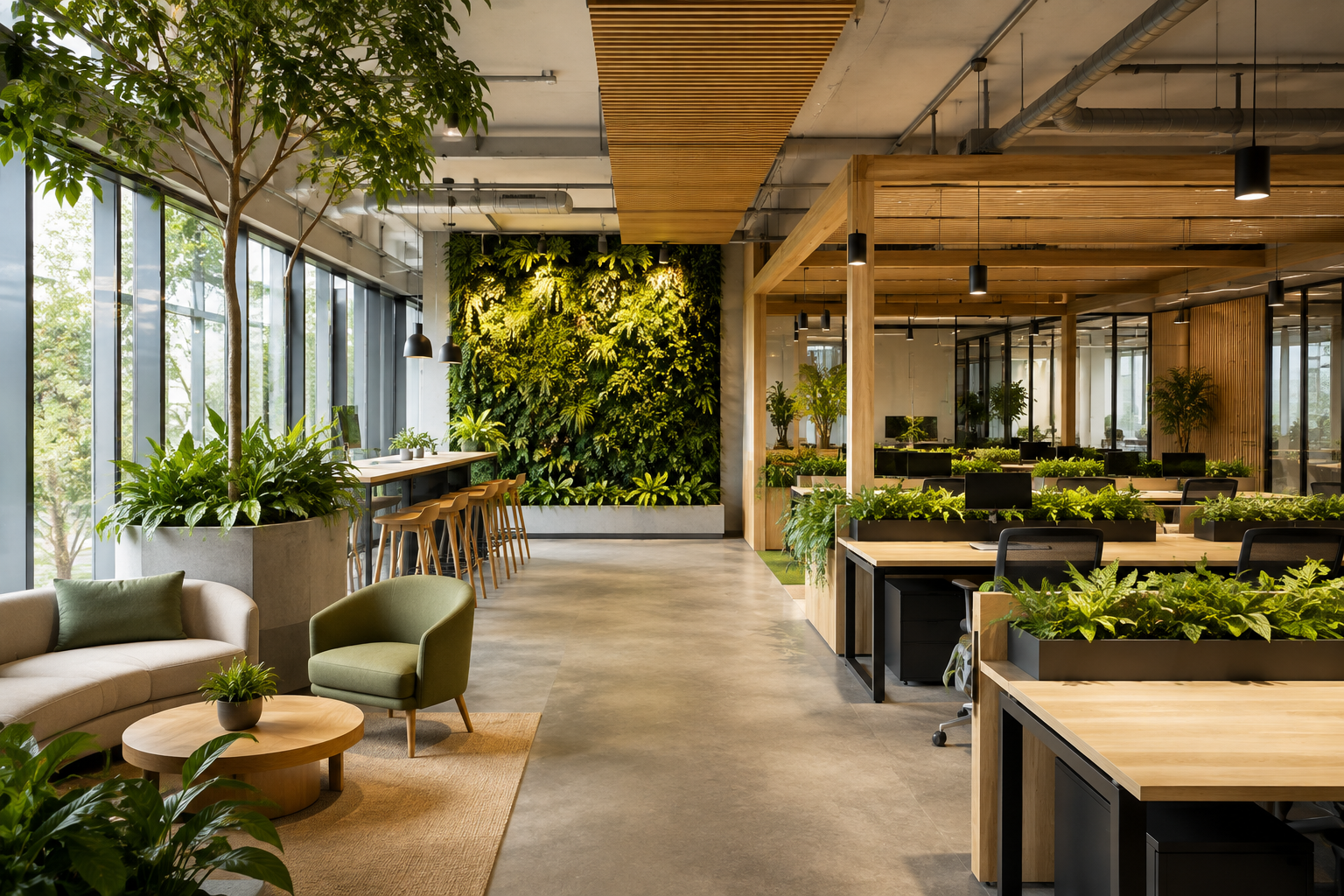
Incorporate Biophilic Design
Biophilic design connects people with nature through thoughtful interior design.
Popular elements include:
- Indoor plants
- Living green walls
- Natural wood finishes
- Water features
- Stone textures
- Nature-inspired color palettes
- Outdoor terraces
Biophilic spaces have been shown to reduce stress while increasing creativity and productivity.
Plan Efficient Space Utilization
Sustainability isn’t only about materials—it’s also about using space efficiently.
Smart planning includes:
- Multi-functional meeting rooms
- Flexible workstations
- Modular furniture
- Shared collaboration areas
- Optimized storage
Efficient layouts reduce unnecessary construction while making better use of available space.
Select Durable Furniture
High-quality furniture lasts longer and reduces replacement costs.
Look for:
- FSC-certified wood products
- Recyclable furniture
- Modular office systems
- Repairable furniture components
- Locally manufactured products
Durability supports both sustainability goals and long-term financial savings.
Reduce Water Consumption
Commercial interiors can also conserve water through smart fixtures.
Install:
- Low-flow faucets
- Water-efficient toilets
- Sensor-based taps
- Rainwater harvesting systems
- Smart irrigation for landscaping
Small improvements can significantly reduce water usage over time.
Integrate Smart Technology
Technology plays a key role in sustainable workplaces.
Examples include:
- Smart lighting automation
- Occupancy sensors
- Building management systems
- Energy monitoring software
- Smart thermostats
- Automated blinds
These systems optimize energy usage while improving workplace comfort.
Design for Flexibility
Business needs evolve, and sustainable spaces should adapt without requiring major renovations.
Flexible design solutions include:
- Modular partitions
- Movable furniture
- Adaptable workstations
- Expandable collaboration zones
- Multi-purpose rooms
Future-ready spaces reduce construction waste and renovation costs.
Support Employee Wellness
A sustainable office should prioritize people as much as the environment.
Wellness-focused features include:
- Ergonomic furniture
- Quiet work zones
- Wellness rooms
- Comfortable breakout spaces
- Abundant natural lighting
- Access to greenery
Employees who work in healthy environments often experience greater job satisfaction and productivity.
Common Mistakes to Avoid
Avoid these common sustainability mistakes:
- Prioritizing appearance over functionality
- Ignoring energy efficiency
- Choosing low-cost but short-lived materials
- Overlooking indoor air quality
- Poor space planning
- Excessive artificial lighting
- Neglecting future adaptability
- Failing to maintain sustainable systems
Long-term planning always delivers better value than short-term savings.
The Role of Professional Designers
Experienced architects and interior designers help businesses implement sustainable practices without sacrificing aesthetics or functionality.
They evaluate:
- Building orientation
- Energy performance
- Material selection
- Space utilization
- Lighting design
- Ventilation
- Employee workflow
- Environmental impact
Professional planning ensures sustainability is integrated from the earliest stages of the project.
Conclusion
Sustainable commercial interior design is an investment in the future of your business. By combining smart space planning, energy-efficient systems, eco-friendly materials, and employee-focused design, businesses can create workspaces that are healthier, more productive, and environmentally responsible.
As sustainability continues to shape the future of architecture and interior design, businesses that embrace green design today will enjoy long-term operational savings, stronger brand value, and workplaces that inspire employees and customers alike.
Whether you’re designing a new office, renovating an existing workspace, or planning a commercial development, sustainable interior design is one of the smartest investments you can make.