Introduction
Hospital design has evolved far beyond creating functional healthcare facilities. Today, hospitals are designed with one primary goal in mind: improving the patient experience. From calming waiting areas and intuitive layouts to natural lighting and infection-resistant materials, thoughtful hospital interior design can positively influence recovery, reduce stress, and enhance the overall quality of care.
A well-designed healthcare environment doesn’t just benefit patients—it also improves staff efficiency, visitor comfort, and operational performance. By combining functionality, safety, and aesthetics, modern hospital interiors create spaces that promote healing while supporting medical professionals.
In this blog, we’ll explore how strategic hospital interior design can transform patient experiences and why investing in healthcare design is essential for modern medical facilities.
Why Hospital Interior Design Matters
For many people, visiting a hospital can be stressful and overwhelming. The physical environment plays a significant role in shaping emotions, reducing anxiety, and improving confidence in the quality of care.
Well-designed hospital interiors can:
- Reduce patient stress and anxiety
- Improve navigation throughout the facility
- Enhance staff productivity
- Promote faster recovery
- Increase patient satisfaction
- Support infection prevention
- Improve operational efficiency
Design is no longer just about appearance—it has become an essential part of healthcare delivery.
Create a Welcoming First Impression
The patient journey begins the moment someone enters the hospital.
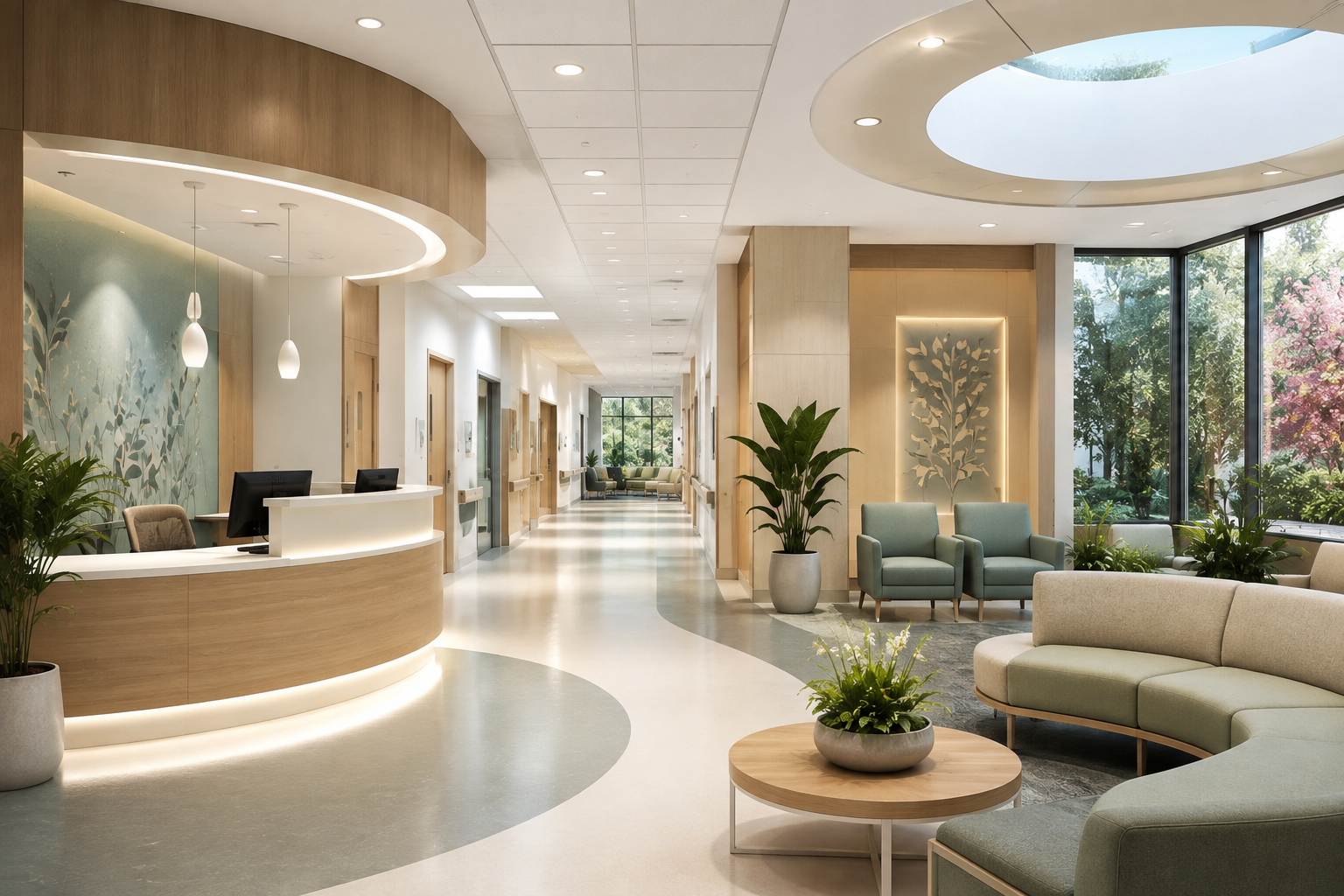
Reception and waiting areas should feel warm, welcoming, and organized.
Key features include:
- Comfortable seating
- Natural lighting
- Clear signage
- Spacious layouts
- Calm color palettes
- Accessible entrances
A welcoming reception area immediately helps patients and visitors feel more at ease.
Prioritize Patient Comfort
Comfort is one of the most important aspects of healthcare design.
Patient rooms should include:
- Ergonomic furniture
- Comfortable beds
- Adjustable lighting
- Privacy curtains
- Noise reduction features
- Space for family members
A comfortable environment contributes to both physical recovery and emotional well-being.
Maximize Natural Light
Access to daylight has been linked to improved patient recovery and reduced stress.
Natural light can:
- Improve mood
- Support healthy sleep cycles
- Reduce anxiety
- Lower dependence on artificial lighting
- Create a more pleasant environment
Large windows, skylights, and glass partitions help distribute daylight throughout healthcare spaces whenever feasible.
Use Calming Colors and Materials
Interior finishes influence how patients perceive healthcare environments.
Common choices include:
- Soft blues
- Warm neutrals
- Light greens
- Natural wood finishes
- Matte textures
- Non-reflective surfaces
These materials create spaces that feel more welcoming and less clinical while remaining easy to maintain.
Design Intuitive Wayfinding Systems
Hospitals can be confusing, especially for first-time visitors.
Effective wayfinding includes:
- Clear directional signage
- Color-coded departments
- Simple floor layouts
- Easily identifiable landmarks
- Digital information kiosks
Easy navigation reduces frustration and allows patients to reach their destinations with confidence.
Support Infection Control
Healthcare interiors must prioritize hygiene without compromising aesthetics.
Design strategies include:
- Seamless flooring
- Antimicrobial surfaces
- Easy-to-clean wall finishes
- Hands-free fixtures
- Proper ventilation systems
- Clearly separated clean and contaminated zones
Thoughtful material selection supports both patient safety and operational efficiency.
Incorporate Biophilic Design
Connecting patients with nature can have a positive impact on emotional well-being.
Biophilic elements include:
- Indoor plants (where clinically appropriate)
- Healing gardens
- Nature-inspired artwork
- Green courtyards
- Water features in public spaces
- Views of landscaped outdoor areas
These elements create calming environments that reduce stress and promote healing.
Improve Waiting Areas
Waiting is often the most stressful part of a hospital visit.
Well-designed waiting spaces should provide:
- Comfortable seating
- Charging stations
- Children’s play areas
- Reading spaces
- Refreshment zones
- Adequate privacy
Comfortable waiting areas improve the experience for both patients and families.
Design Efficient Staff Workspaces
Healthcare professionals work in demanding environments.
Efficient layouts help staff:
- Respond more quickly to patients
- Reduce unnecessary walking
- Improve communication
- Access equipment easily
- Work more comfortably during long shifts
Better workspace planning ultimately benefits patient care.
Integrate Smart Healthcare Technology
Modern hospitals increasingly rely on technology to improve patient experiences.
Design should accommodate:
- Digital patient registration
- Smart room controls
- Electronic medical records
- Telemedicine facilities
- Digital wayfinding
- Automated lighting and climate control
Technology should be seamlessly integrated into the design without overwhelming users.
Ensure Accessibility for Everyone
Healthcare facilities must be inclusive and easy to navigate for all users.
Accessibility features include:
- Wheelchair-friendly pathways
- Automatic doors
- Accessible washrooms
- Tactile flooring
- Braille signage
- Barrier-free reception counters
Universal design ensures every patient receives equal access to healthcare services.
Create Flexible Healthcare Spaces
Healthcare needs change over time.
Flexible interiors allow hospitals to adapt through:
- Modular furniture
- Movable partitions
- Convertible treatment rooms
- Expandable departments
- Multi-purpose consultation spaces
Flexible planning improves long-term efficiency and reduces renovation costs.
Common Hospital Design Mistakes
Avoid these common issues:
- Poor wayfinding
- Overcrowded waiting rooms
- Inadequate natural lighting
- Excessive noise
- Poor ventilation
- Difficult-to-clean materials
- Limited accessibility
- Inefficient staff circulation
Professional planning helps eliminate these problems before construction begins.
The Role of Healthcare Interior Designers
Hospital design requires specialized expertise that balances aesthetics with strict healthcare standards.
Professional designers consider:
- Clinical workflows
- Patient safety
- Infection control
- Accessibility
- Lighting design
- Acoustic comfort
- Material durability
- Regulatory compliance
Their experience ensures hospitals function efficiently while creating welcoming environments for patients and staff.
Conclusion
Hospital interior design plays a critical role in improving patient experiences, supporting healthcare professionals, and enhancing operational efficiency. Every design decision—from lighting and layout to materials and technology—can influence comfort, safety, and recovery.
By prioritizing patient-centered design, hospitals can create healing environments that reduce stress, improve satisfaction, and support better healthcare outcomes.
Whether designing a new healthcare facility or renovating an existing hospital, investing in thoughtful interior design is an investment in both patient well-being and the future of healthcare.