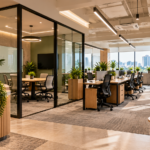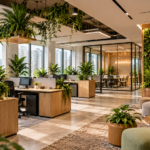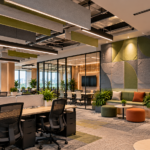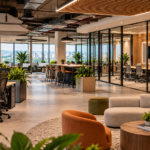
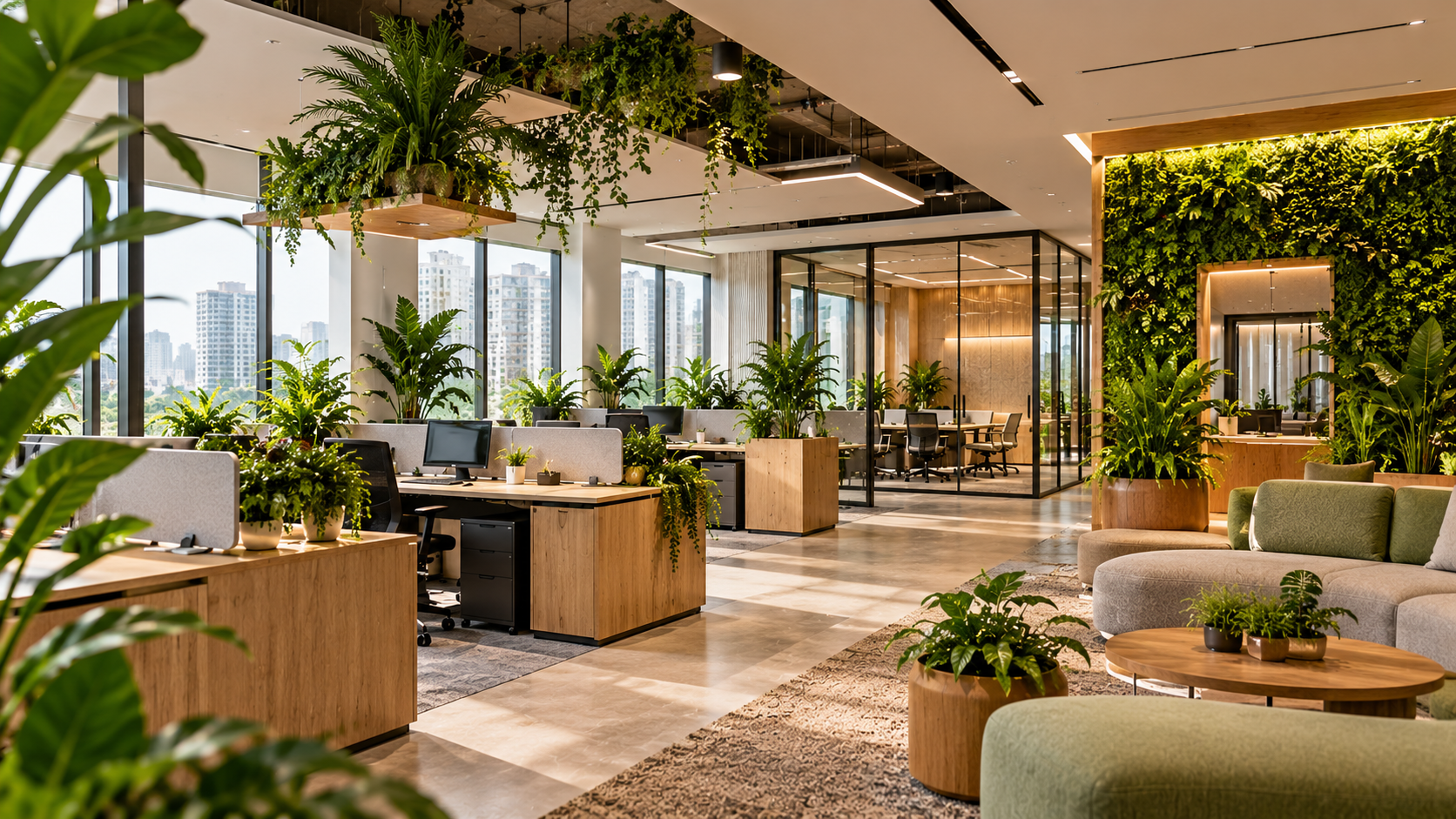
Modern offices are moving beyond traditional desks, glass partitions, and artificial lighting. Businesses are increasingly looking for ways to create workspaces that feel more natural, comfortable, and connected to the outdoors.
One design approach gaining attention is biophilic office design.
From indoor plants and natural lighting to wooden finishes, green walls, and nature-inspired materials, biophilic design brings elements of nature into the workplace.
But creating a nature-inspired office doesn’t necessarily mean spending a fortune on expensive installations, imported furniture, or elaborate vertical gardens.
With thoughtful planning, even a small office can incorporate natural elements without significantly increasing its interior budget.
Whether you’re designing a new office, renovating an existing workspace, or upgrading a commercial interior, this guide explores practical biophilic office design ideas that deliver visual impact without unnecessary expenses.
1. What Is Biophilic Office Design?
Biophilic office design is an approach to interior design that incorporates natural elements into built environments.
The concept is based on creating a stronger connection between people and nature through the use of natural materials, greenery, daylight, textures, colours, and organic design elements.
Instead of treating plants as decorative accessories, biophilic design integrates nature into the overall workspace experience.
Some common elements include:
- Indoor plants and natural greenery
- Natural daylight and outdoor views
- Wooden furniture and finishes
- Stone and natural-texture materials
- Nature-inspired colour palettes
- Indoor gardens and green walls
- Natural ventilation where practical
- Organic shapes and patterns
- Water features in suitable spaces
The objective is to create a workspace that feels welcoming, visually balanced, and comfortable for employees.
Biophilic design doesn’t require every surface to be covered in greenery. Even a few carefully selected natural elements can transform the appearance of an office.
2. Why Are Businesses Choosing Biophilic Office Interiors?
An office is more than a place where employees complete their daily tasks. It also influences how people experience their workplace.
Biophilic design offers several potential advantages.
1. A More Comfortable Working Environment
Natural materials, greenery, and access to daylight can help create a more welcoming workplace.
2. Better Visual Experience
Plants, wooden textures, and natural colours add depth and character to otherwise ordinary commercial interiors.
3. Improved Connection With Nature
Employees who spend most of their day indoors can benefit from having natural elements incorporated into their surroundings.
4. A More Distinctive Brand Identity
Businesses can use greenery, sustainable materials, and nature-inspired interiors to communicate their brand values.
5. A Flexible Design Approach
Biophilic elements can be introduced into almost any type of workspace, including startups, corporate offices, creative studios, and coworking spaces.
Research on biophilic design and workplace environments suggests potential benefits for perceived comfort, wellbeing, and satisfaction. However, results depend on the quality of the design and how the space is used. Plants alone should not be treated as a guaranteed productivity solution.
3. Eight Budget-Friendly Biophilic Office Design Ideas
Creating a nature-inspired office doesn’t require a complete interior renovation.
Here are eight practical ways to introduce biophilic elements while keeping your budget under control.
Idea 1: Introduce Indoor Plants Strategically
<AsyncImage query=”modern office interior indoor tropical plants around workstations wooden furniture natural daylight” aspectRatio=”16:9″ width=”100%”/>
Indoor plants are one of the easiest ways to introduce biophilic design into an office.
Instead of purchasing expensive decorative installations, start with a few strategically placed plants.
Some suitable options for indoor offices in India include:
- Snake plant
- Money plant
- ZZ plant
- Areca palm
- Peace lily
- Rubber plant
- Pothos
The right plant depends on available daylight, ventilation, watering requirements, and maintenance capacity.
Where can you place them?
- Near reception areas
- Along workstation clusters
- Beside meeting room entrances
- In office corners
- Around lounge seating
- Near windows with suitable light
Budget-saving tip: Purchase healthy plants from local nurseries and use simple ceramic, terracotta, or neutral-coloured planters instead of expensive designer pots.
You can create a visually attractive green environment without investing in elaborate landscaping.
Idea 2: Create a Green Feature Wall
<AsyncImage query=”modern office reception vertical green wall living plants wood slat wall minimalist interior” aspectRatio=”16:9″ width=”100%”/>
A green feature wall can become the visual highlight of an office.
It works particularly well in reception areas, lounge spaces, and collaborative zones.
There are two main approaches:
Natural green walls: These use living plants installed through a suitable vertical planting system. They require irrigation, drainage, appropriate lighting, and regular maintenance.
Artificial green walls: These use high-quality artificial foliage to create a similar visual effect without regular watering.
For businesses working with limited budgets, a small green feature wall can be more practical than installing greenery across an entire office.
Budget-saving tip: Instead of covering a complete wall, create a smaller green installation combined with wooden slats, neutral paint, or a company logo.
This delivers visual impact while controlling material and maintenance expenses.
Idea 3: Use Natural Wood Finishes
<AsyncImage query=”modern biophilic office interior light oak wooden desks wood slat walls natural materials plants” aspectRatio=”16:9″ width=”100%”/>
Wood is one of the most versatile materials used in biophilic interiors.
It introduces natural warmth and works well with greenery, neutral colours, and soft lighting.
You don’t necessarily need expensive solid wood furniture to achieve this look.
Consider:
- Wood-finish laminates
- Veneer finishes
- Wooden wall panels
- Wooden workstation tops
- Slatted decorative partitions
- Natural-texture furniture
Light oak, walnut, and other warm wood tones can create a welcoming environment.
Budget-saving tip: Use wood finishes strategically on reception counters, feature walls, meeting tables, and selected workstation surfaces rather than applying them throughout the office.
Idea 4: Maximise Natural Lighting
<AsyncImage query=”bright biophilic office floor to ceiling windows natural daylight indoor plants open workspace” aspectRatio=”16:9″ width=”100%”/>
Natural lighting is one of the most important elements of biophilic office design.
A workspace with access to daylight can feel more open and visually connected to its surroundings.
Instead of depending entirely on artificial lighting, consider how your office layout can make better use of existing windows.
Practical ideas include:
- Position workstations near available daylight.
- Avoid placing tall storage units in front of windows.
- Use glass partitions where appropriate.
- Choose lighter wall colours.
- Keep window areas uncluttered.
- Use blinds that allow controlled daylight.
- Select lighting systems that complement natural light.
Budget-saving tip: Before investing in new lighting fixtures, review the existing layout and see whether furniture repositioning can improve daylight distribution.
This can be one of the most economical improvements in an office renovation.
Idea 5: Introduce Nature-Inspired Colours
<AsyncImage query=”modern office interior sage green beige earthy neutral palette plants natural wood finishes” aspectRatio=”16:9″ width=”100%”/>
You don’t need actual plants everywhere to create a nature-inspired interior.
Colours also play an important role in biophilic design.
Consider using a palette inspired by natural environments:
- Sage green
- Olive green
- Warm beige
- Terracotta
- Sandstone
- Soft brown
- Muted grey
- Off-white
These colours can be introduced through wall paint, furniture, upholstery, partitions, and decorative accessories.
Budget-saving tip: Repainting selected walls can make a significant visual difference without requiring extensive construction or expensive materials.
A combination of sage green, warm beige, and natural wood finishes works particularly well in modern office interiors.
Idea 6: Create a Small Indoor Garden or Green Corner
<AsyncImage query=”small indoor office garden corner modern commercial interior natural plants pebble planters bench seating” aspectRatio=”16:9″ width=”100%”/>
Not every office needs a large landscaped garden.
A small indoor green corner can introduce a natural element into an otherwise unused space.
You can create one using:
- Large indoor planters
- Pebble flooring accents
- Wooden benches
- Low-maintenance plants
- Natural-texture wall finishes
- Decorative stones
Suitable locations include office entrances, breakout areas, lounge spaces, and corners with adequate natural light.
Budget-saving tip: Use an existing unused corner rather than constructing a dedicated landscaped area.
Choose plants that can survive the available lighting and indoor conditions.
Idea 7: Choose Natural and Sustainable Materials
<AsyncImage query=”sustainable modern office interior cork wall panels bamboo furniture natural linen upholstery wood plants” aspectRatio=”16:9″ width=”100%”/>
Biophilic design is not limited to plants and greenery.
The materials used throughout an office can also contribute to its natural appearance.
Consider materials such as:
- Bamboo
- Cork
- Natural wood
- Jute
- Cotton and linen fabrics
- Terracotta
- Stone finishes
- Recycled or reclaimed materials
These materials can introduce interesting textures while supporting a nature-inspired design direction.
However, sustainable materials are not automatically cheaper. Compare durability, availability, maintenance, and lifecycle cost before making a selection.
Budget-saving tip: Use natural materials as accents rather than replacing every existing finish.
For example, a cork noticeboard, jute lounge accessories, and a few wooden furniture elements can add character without requiring a complete material upgrade.
Idea 8: Bring Nature Into Breakout and Lounge Areas
<AsyncImage query=”biophilic office breakout lounge interior green plants curved sofa wooden coffee table natural daylight” aspectRatio=”16:9″ width=”100%”/>
Breakout areas are ideal locations for biophilic design.
Instead of treating them as additional seating spaces, businesses can create comfortable environments where employees can relax, interact, or take a break.
Consider adding:
- Comfortable lounge seating
- Indoor plants
- Wooden coffee tables
- Natural-texture rugs
- Soft neutral upholstery
- Warm lighting
- Nature-inspired artwork
This creates a more relaxed environment without requiring extensive changes to the main office layout.
Budget-saving tip: Upgrade an existing lounge area using new upholstery, a few plants, and natural decorative elements instead of replacing all the furniture.
4. How Much Does Biophilic Office Design Cost?
One common misconception is that biophilic office design is expensive.
While large vertical gardens, specialised irrigation systems, and premium natural materials can increase project costs, many biophilic elements are relatively affordable.
The following are broad indicative planning estimates for 2026 in India.
| Biophilic Element | Indicative Budget |
|---|---|
| Small Indoor Plants | ₹200–₹1,000 per plant |
| Medium Decorative Planters | ₹500–₹2,500 per unit |
| Large Indoor Plants | ₹1,500–₹6,000+ per plant |
| Decorative Green Wall | ₹800–₹2,500+ per sq. ft. |
| Artificial Green Wall | ₹300–₹1,000+ per sq. ft. |
| Wood-Finish Wall Treatment | ₹150–₹600+ per sq. ft. |
| Nature-Inspired Wall Painting | ₹25–₹80+ per sq. ft. |
| Natural Decorative Accessories | ₹500–₹5,000+ per item |
These are indicative budgeting ranges, not verified supplier quotations. Prices vary depending on plant species, planter quality, materials, installation, location, and customisation. Green wall prices in particular depend heavily on whether the system uses living or artificial plants.
5. Example: Biophilic Office Design on a ₹1 Lakh Budget
You don’t need to redesign an entire office to introduce natural elements.
Let’s consider a business that wants to upgrade a 2,000 sq. ft. office with a limited additional budget of ₹1 lakh.
An illustrative allocation could look like this:
| Design Element | Estimated Budget |
|---|---|
| Indoor Plants | ₹15,000 |
| Decorative Planters | ₹12,000 |
| Small Green Feature Wall | ₹25,000 |
| Wood-Finish Accent Wall | ₹18,000 |
| Nature-Inspired Wall Paint | ₹10,000 |
| Lounge Accessories | ₹8,000 |
| Installation and Contingency | ₹12,000 |
| Total | ₹1,00,000 |
This is an example budget, not a fixed market quotation.
The idea is to prioritise visible areas such as reception, lounge spaces, and collaborative zones instead of spreading a limited budget too thinly across the entire office.
6. Biophilic Office Design for Different Business Types
Different businesses have different workplace requirements.
Here are some ways biophilic design can be adapted to different office environments.
For Startups
Startups generally need practical interiors that look attractive without creating unnecessary expenses.
Recommended elements:
- Low-maintenance indoor plants
- Wooden workstation finishes
- Nature-inspired wall colours
- Small breakout corners
- Natural daylight
For Corporate Offices
Corporate offices can introduce biophilic elements through more structured design features.
Recommended elements:
- Green reception walls
- Indoor landscaping
- Natural-material meeting rooms
- Large planters
- Biophilic lounge spaces
For Creative Agencies
Creative offices can experiment with colours, textures, and unconventional layouts.
Recommended elements:
- Indoor plant clusters
- Wooden collaborative tables
- Nature-inspired artwork
- Green breakout spaces
- Organic furniture shapes
For IT and Technology Companies
Technology offices often have large open-plan workspaces.
Recommended elements:
- Green workstation dividers
- Indoor plants
- Acoustic-friendly natural finishes
- Daylight-oriented layouts
- Nature-inspired relaxation zones
7. Common Mistakes to Avoid in Biophilic Office Design
Introducing natural elements without proper planning can create maintenance problems and unnecessary expenses.
Here are some mistakes businesses should avoid.
1. Choosing Plants Without Checking Lighting
Not every indoor plant can survive in low-light office environments.
Select plants based on actual daylight conditions and consider suitable grow lighting where required.
2. Overcrowding the Workspace
Too many plants can obstruct circulation, reduce usable desk space, and make maintenance difficult.
Keep the layout balanced.
3. Ignoring Maintenance Requirements
Living plants need watering, pruning, cleaning, and occasional replacement.
Assign maintenance responsibility before installing large green features.
4. Spending Too Much on Green Walls
A full-height living wall may look attractive, but it can require specialised irrigation, drainage, lighting, and ongoing maintenance.
Smaller green installations may provide better value for offices with limited budgets.
5. Blocking Natural Light
Large planters and decorative installations should not obstruct windows or create unnecessary shadows.
6. Selecting Materials Only for Appearance
Natural materials should also meet commercial requirements for durability, cleaning, fire safety, and maintenance.
7. Treating Biophilic Design as Decoration Only
Effective biophilic design considers daylight, views, materials, layout, sensory experience, and the overall relationship between people and their environment.
8. How to Maintain a Biophilic Office
A successful biophilic office should remain attractive and functional long after installation.
Before selecting plants and natural materials, consider their ongoing maintenance requirements.
Here are some practical recommendations:
- Choose plants suited to indoor lighting conditions.
- Establish a regular watering schedule.
- Remove damaged or unhealthy leaves.
- Clean planters and surrounding surfaces.
- Ensure appropriate drainage.
- Avoid water leakage near electrical installations.
- Use durable materials in high-traffic areas.
- Schedule periodic inspection of living walls.
- Replace plants when necessary.
For businesses without dedicated maintenance staff, low-maintenance plants and smaller installations are generally more practical.
9. How to Plan a Biophilic Office Interior Step by Step
If you’re planning a new office or renovation, follow a structured approach.
Step 1: Evaluate the Existing Workspace
Understand the available natural light, ventilation, floor area, and existing furniture.
Step 2: Identify Priority Areas
Start with spaces that employees and visitors use frequently, such as reception areas, lounges, meeting rooms, and collaborative zones.
Step 3: Select a Natural Colour Palette
Choose a consistent combination of greens, neutrals, earthy colours, and natural finishes.
Step 4: Choose Suitable Plants and Materials
Select plants according to their maintenance requirements and available lighting. Compare natural and artificial alternatives for decorative installations.
Step 5: Allocate Your Budget
Prioritise high-impact improvements instead of investing heavily in multiple decorative features.
Step 6: Coordinate With Your Interior Designer
Ensure that greenery, lighting, furniture, electrical installations, and circulation areas are integrated into the overall design.
Step 7: Establish a Maintenance Plan
Decide who will maintain the plants and inspect the installations after handover.
Frequently Asked Questions (FAQs)
1. What is biophilic office design?
Biophilic office design is an approach that incorporates natural elements such as plants, daylight, wood, natural materials, and nature-inspired textures into commercial workspaces.
2. Is biophilic office design expensive?
Not necessarily. Businesses can introduce biophilic elements through indoor plants, natural colours, wooden finishes, and improved daylight utilisation without undertaking an expensive renovation.
3. Which plants are best for office interiors in India?
Snake plants, money plants, ZZ plants, areca palms, and pothos are popular indoor choices. The best plant depends on the available light, ventilation, maintenance capacity, and indoor conditions.
4. What is the difference between biophilic design and green office design?
Green office design often focuses on environmental sustainability, energy efficiency, and responsible material choices. Biophilic design specifically focuses on connecting people with nature through natural elements and experiences. The two approaches can complement each other.
5. Can biophilic design work in a small office?
Yes. Small offices can use compact planters, vertical greenery, wooden finishes, natural lighting, and nature-inspired colour schemes without requiring dedicated garden spaces.
6. Are artificial plants suitable for biophilic office interiors?
Artificial plants can provide a low-maintenance decorative alternative when natural lighting is insufficient. However, they do not provide the same living connection with nature as real plants.
7. Does biophilic design improve employee productivity?
Research suggests that well-designed natural elements may improve perceived workplace comfort, satisfaction, and wellbeing. However, productivity outcomes vary and depend on factors beyond interior design.
8. How much does a green wall cost for an office?
A decorative artificial green wall may have a different cost structure from a living green wall. Indicative budgets can range from a few hundred rupees to several thousand rupees per square foot, depending on the system, materials, and installation.
9. Does biophilic design require natural sunlight?
Natural daylight is beneficial, but not every biophilic element requires direct sunlight. Suitable indoor plants, natural materials, textures, nature-inspired artwork, and appropriately designed artificial lighting can also contribute to the experience.
10. Is biophilic office design suitable for corporate offices?
Yes. It can be incorporated into corporate offices through reception landscaping, natural-material finishes, meeting room interiors, indoor plants, and dedicated relaxation spaces.
Conclusion: Create a Natural Workspace Without Overspending
Biophilic office design is not about filling every corner with plants or spending heavily on decorative installations.
It is about creating a thoughtful relationship between the workspace and the natural environment.
Simple changes such as adding indoor greenery, introducing natural wood finishes, improving daylight access, using earthy colour palettes, and creating comfortable breakout spaces can transform an ordinary office.
The key is to prioritise the right elements, select materials that fit your budget, and plan for long-term maintenance.
Whether you’re designing a 1,000 sq. ft. startup office or a large corporate workspace, biophilic design can help create a more welcoming and visually engaging environment.
Planning a nature-inspired office?
Let’s create a workspace that combines functional office planning, natural materials, greenery, and thoughtful interior design without exceeding your project budget.