Introduction
Delhi is one of India’s most dynamic retail markets, with established shopping destinations, high-street markets, premium malls, and rapidly developing commercial areas. For growing brands, opening a physical retail store in Delhi can be an important step toward building visibility, customer trust, and a stronger brand presence.
However, simply having a store in a prime location isn’t enough. The design of the retail space can directly influence how customers perceive the brand, navigate the store, interact with products, and ultimately make purchasing decisions.
A successful retail store should combine brand identity, functionality, customer psychology, efficient space planning, and an experience that encourages customers to return.
Here are some important retail store design tips for growing brands in Delhi.
1. Start With the Brand, Not the Furniture
Every retail store should communicate the brand’s personality as soon as a customer enters.
Before deciding on colours, furniture, or materials, define:
- Brand positioning
- Target customer
- Product category
- Price segment
- Brand personality
- Customer expectations
A premium fashion brand, for example, may require a very different environment from a youth-focused streetwear brand or a beauty retailer.
The interior should make the brand recognizable even without excessive logos or signage.
2. Choose the Right Store Layout
Good retail design starts with understanding how customers move through the space.
Depending on the store, layouts can include:
- Grid layouts
- Free-flow layouts
- Loop layouts
- Boutique-style layouts
- Open-plan layouts
The right layout should make it easy for customers to discover products while maintaining comfortable circulation.
Avoid overcrowding displays simply because the store has limited space. A well-edited product selection can often create a stronger premium experience than an overcrowded store.
3. Make the Storefront Work Harder
The storefront is often the first physical interaction between a customer and your brand.
An effective storefront should communicate:
- What the brand sells
- Who it is for
- What makes it different
- Why someone should enter
Consider investing in:
- Attractive window displays
- Architectural lighting
- High-quality signage
- Distinctive materials
- Seasonal visual merchandising
For growing brands, the storefront can also become an important visual asset for social media content.
4. Design for Delhi’s Diverse Retail Environment
Delhi’s retail landscape includes premium malls, busy high streets, neighbourhood markets, mixed-use developments, and standalone commercial properties.
Each environment requires a different design strategy.
A store inside a premium mall may need to compete with sophisticated neighbouring brands, while a high-street store may need stronger visibility from pedestrians and passing traffic.
Before designing the interiors, study:
- Surrounding businesses
- Customer demographics
- Footfall patterns
- Storefront visibility
- Parking and accessibility
- Nearby attractions
- Local competition
The location should influence the design rather than being treated as an afterthought.
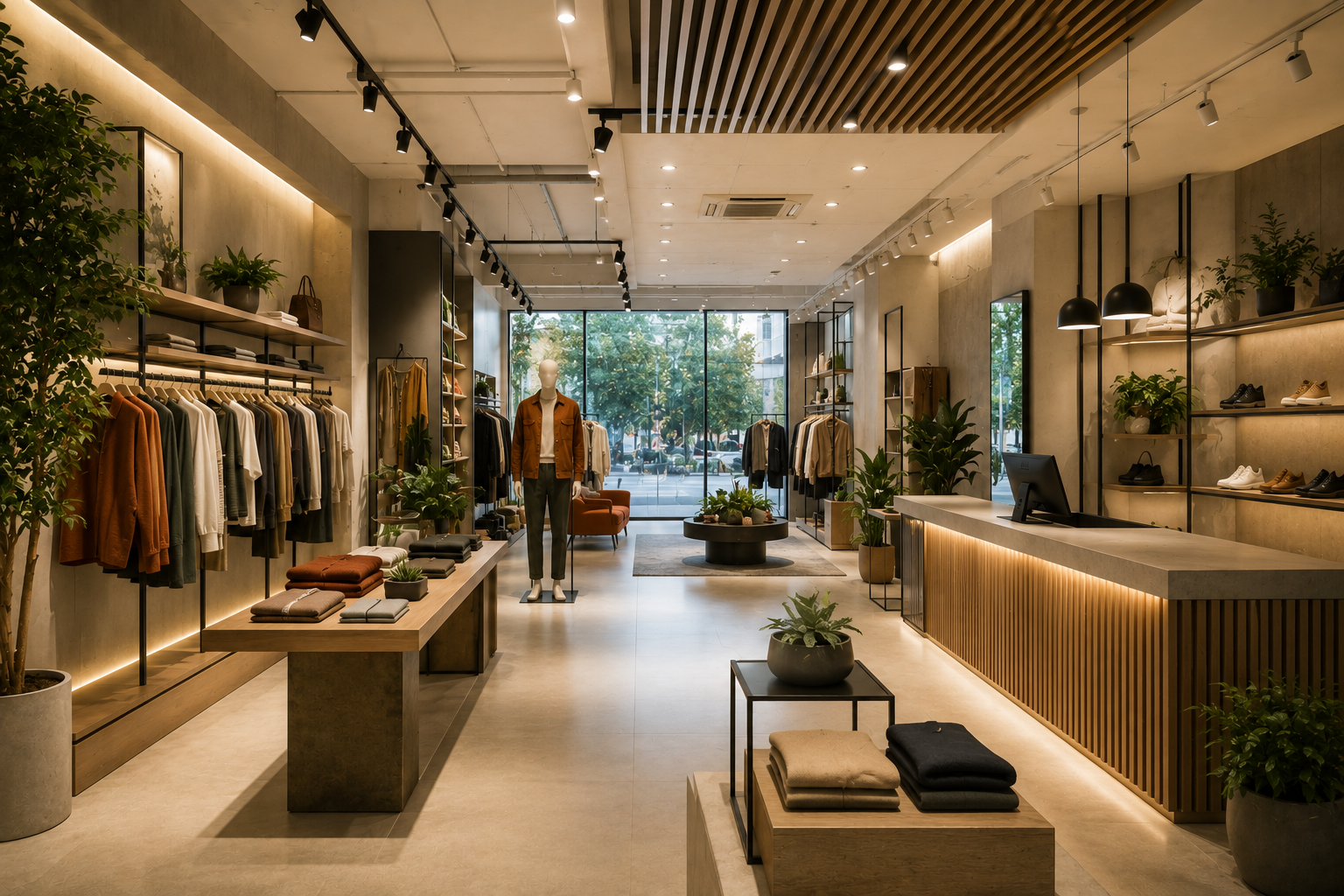
5. Use Lighting to Influence the Shopping Experience
Lighting is one of the most powerful elements of retail interior design.
Different lighting layers can serve different purposes:
Ambient Lighting
Provides overall illumination.
Accent Lighting
Highlights products, displays, artwork, and architectural elements.
Task Lighting
Provides focused lighting for areas such as billing counters or fitting rooms.
Decorative Lighting
Adds character and reinforces the brand identity.
The colour temperature and intensity should also complement the products and materials used in the store.
6. Create Strong Product Displays
Customers need to understand the product offering quickly.
Effective displays can use:
- Feature walls
- Modular shelving
- Display tables
- Floating shelves
- Backlit niches
- Product islands
- Vertical merchandising
High-margin or hero products can be positioned in visually prominent locations.
The objective isn’t simply to display more products. It is to direct attention toward the right products at the right moments.
7. Don’t Ignore Customer Circulation
A beautiful store can still fail if customers struggle to move through it.
Plan clear paths between:
- Entrance
- Product zones
- Trial rooms
- Billing counter
- Waiting areas
- Exit
Avoid creating unnecessary bottlenecks.
Customers should be able to browse comfortably without constantly navigating around furniture, displays, or other shoppers.
8. Make Fitting Rooms Comfortable
For fashion and lifestyle brands, fitting rooms are a critical part of the customer journey.
Consider:
- Adequate space
- Full-length mirrors
- Flattering lighting
- Comfortable seating
- Hooks and storage
- Privacy
- Easy access to staff
A well-designed fitting room can improve the overall shopping experience and encourage customers to try products.
9. Design the Billing Area Strategically
The checkout counter shouldn’t feel like an afterthought.
Its location should be easy to find without disrupting the customer journey.
The area can also be used for:
- Small accessories
- Add-on products
- Membership information
- Packaging
- Customer service
For growing brands, the billing area can become an important touchpoint for building loyalty and encouraging repeat purchases.
10. Build Instagram-Worthy Moments
Modern retail spaces increasingly exist both physically and digitally.
Customers often photograph interesting interiors, products, mirrors, installations, and displays.
Consider creating one or two visually distinctive areas using:
- Sculptural furniture
- Statement walls
- Unique lighting
- Brand-inspired installations
- Textured materials
- Greenery
- Artistic displays
The goal should be authenticity rather than designing an entire store simply for social media.
11. Use Materials That Match Your Brand Positioning
Materials influence how customers perceive quality.
Depending on the brand, you could use:
- Natural wood
- Metal
- Glass
- Stone
- Textured laminates
- Microcement
- Fabric
- Sustainable materials
A premium brand may benefit from refined natural materials, while a contemporary youth brand might use more experimental finishes.
Material selection should also consider durability, maintenance, availability, and budget.
12. Plan Storage Efficiently
Storage is one of the most overlooked aspects of retail design.
A store needs space for:
- Additional inventory
- Packaging
- Shopping bags
- Cleaning supplies
- Staff belongings
- Operational equipment
Hidden storage, under-counter cabinets, vertical shelving, and back-of-house planning can help maximize usable space without making the customer-facing area feel crowded.
13. Integrate Technology
Technology can make retail experiences more efficient and engaging.
Depending on the brand, stores can incorporate:
- Digital displays
- QR-based product information
- Self-checkout systems
- Digital payment systems
- Smart inventory systems
- Customer loyalty integration
- Interactive screens
Technology should have a clear purpose rather than being added simply because it looks modern.
14. Design for Omnichannel Retail
Growing brands often operate both online and offline.
The physical store should therefore complement the digital shopping experience.
Consider spaces or systems for:
- Online order pickups
- Returns and exchanges
- Click-and-collect
- Digital product discovery
- Inventory synchronization
A well-designed store can become an extension of the brand’s website and social media presence.
15. Think About Future Growth
Growing brands should avoid designing stores only around today’s requirements.
Consider whether the space can accommodate:
- New product categories
- Additional displays
- Increased inventory
- New technology
- Seasonal campaigns
- Changing customer behaviour
Modular furniture and adaptable display systems can make future updates easier and more cost-effective.
Common Retail Store Design Mistakes
Growing brands should avoid:
- Overcrowding the store
- Poor lighting
- Weak storefront visibility
- Complicated customer circulation
- Insufficient storage
- Ignoring accessibility
- Inconsistent branding
- Using low-quality materials purely to reduce initial costs
- Designing without considering operational workflow
- Focusing only on aesthetics
A successful retail space must work equally well for customers, employees, products, and business operations.
How Professional Retail Interior Designers Can Help
Retail design requires a balance between creativity and commercial strategy.
An experienced retail interior design team can help with:
- Store planning
- Customer circulation
- Visual merchandising
- Material selection
- Lighting design
- Furniture and fixture design
- Branding integration
- Electrical and MEP planning
- 3D visualization
- Execution and project management
The objective is to create a space that looks distinctive while supporting the brand’s commercial goals.
Conclusion
For growing brands, a retail store in Delhi can become much more than a point of sale. It can be a powerful physical expression of the brand—one that builds trust, creates memorable experiences, encourages discovery, and strengthens customer loyalty.
The most successful retail stores don’t simply fill a space with products. They carefully control how customers enter, explore, interact, discover, and purchase.
From storefront design and lighting to circulation, product displays, technology, and future flexibility, every decision matters.
For a growing brand entering Delhi’s competitive retail market, investing in thoughtful retail store design can turn a simple commercial space into a memorable brand experience.