A mandir is more than just a dedicated corner for prayer—it is a space that brings calm, positivity, and a sense of connection into your home. But in modern homes, especially apartments and compact spaces, creating a beautiful pooja area without taking up too much room can be a challenge.
This is where wooden mandir designs stand out. Wood adds warmth, character, and a timeless appeal while allowing you to create everything from a traditional pooja unit to a sleek, contemporary prayer space.
Whether you have a large room or just a small corner, here are some stunning and space-saving wooden mandir ideas to consider for your home.
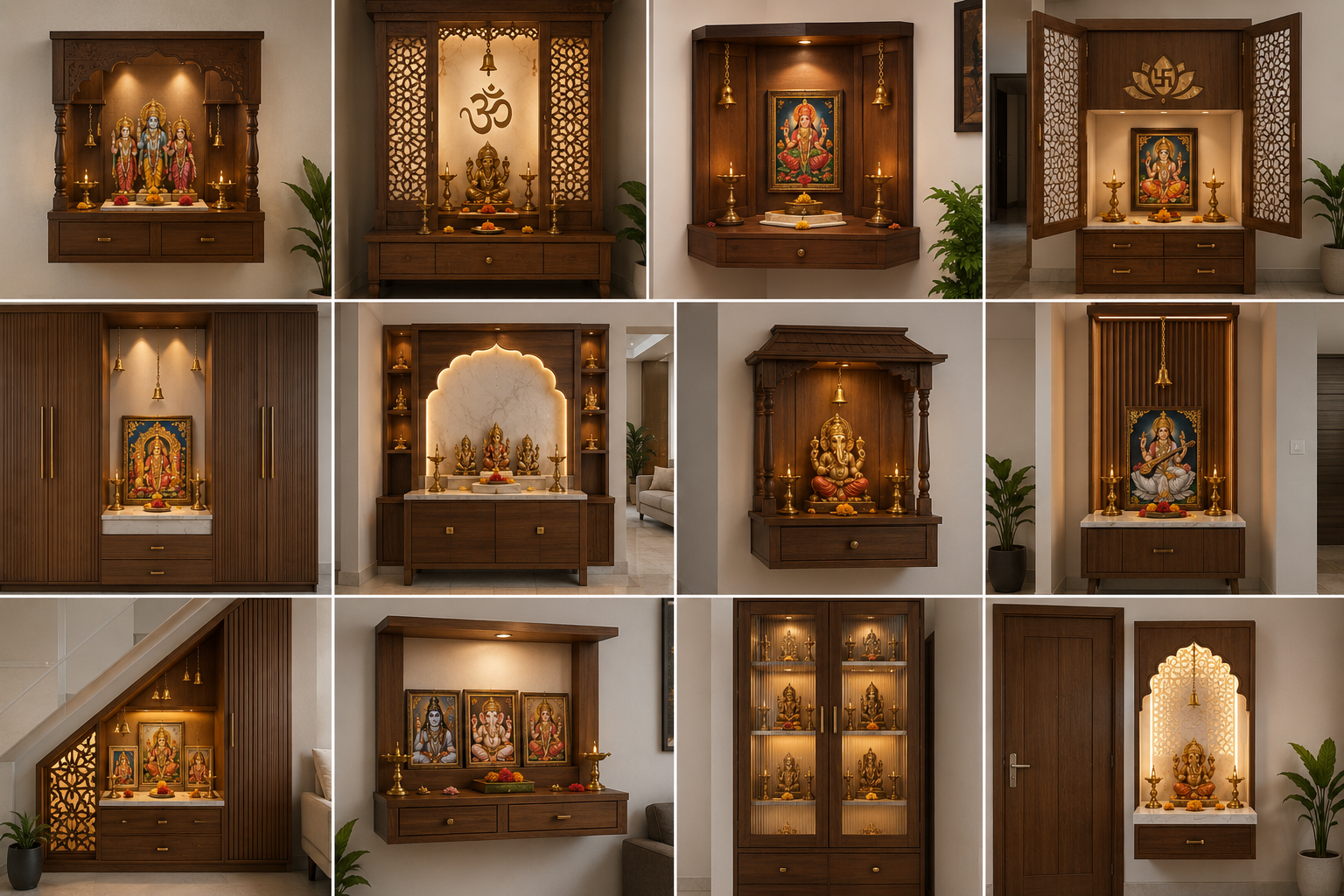
1. Wall-Mounted Wooden Mandir
When floor space is limited, a wall-mounted mandir is one of the most practical options. It keeps the floor clear while creating a dedicated prayer zone.
A simple wooden platform with a back panel, small shelves, and a beautifully carved or CNC-cut frame can create an elegant mandir without making the room feel crowded.
Best for: Apartments, compact living rooms, and small bedrooms.
2. Wooden Mandir With Jaali Panels
Jaali work instantly gives a mandir a traditional Indian character while maintaining visual lightness. Instead of using a completely solid wooden enclosure, you can use intricately designed jaali panels on the sides or as a backdrop.
The filtered light passing through the pattern can create a beautiful and peaceful atmosphere.
For a contemporary home, opt for simple geometric jaali patterns rather than heavily ornamental designs.
3. Compact Corner Mandir
An unused corner can be transformed into a beautiful prayer space with a custom-built wooden corner mandir.
Use two walls to your advantage and add a triangular or L-shaped wooden platform with a small back panel. Floating shelves can provide additional space for diyas, incense, books, and other essentials.
This design is particularly useful when you don’t have enough space for a full-sized pooja unit.
4. Wooden Mandir With Storage Drawers
A mandir doesn’t have to be purely decorative. Smart storage can make it much more functional.
Consider adding drawers or concealed cabinets beneath the main platform to store pooja essentials, incense sticks, cotton wicks, prayer books, and other items.
The key is to keep the storage visually clean so that the mandir doesn’t look like a regular cabinet.
5. Sliding-Door Wooden Mandir
If you want to keep the mandir concealed when it is not being used, sliding wooden doors are an excellent solution.
The doors can feature jaali detailing, fluted wood, glass inserts, or CNC-cut patterns. When closed, the unit can blend seamlessly into the surrounding interiors.
This is especially useful when your mandir is located in a living room or dining area.
6. Wooden Mandir With Backlit Panel
Lighting can completely transform a small mandir.
A wooden back panel with warm LED lighting behind it can create a soft glow around the idols and make the prayer area feel more serene. You can also add concealed lighting beneath shelves for a subtle layered effect.
Choose warm white lighting rather than harsh cool lighting to maintain a peaceful ambience.
7. Minimalist Floating Mandir
For homes with a modern interior, a floating wooden mandir can be a beautiful alternative to traditional bulky units.
A simple wooden shelf, elegant back panel, and a small overhead frame are often enough to define the space.
Keep the design minimal and avoid excessive decorative elements. The simplicity itself becomes the highlight.
8. Full-Height Wooden Mandir
If you have a narrow wall but sufficient vertical height, consider using the wall vertically instead of horizontally.
A full-height wooden mandir can incorporate:
- A dedicated idol platform
- Decorative jaali panels
- Small storage cabinets
- Shelves for pooja accessories
- Concealed lighting
- A decorative top panel
This approach maximizes storage while keeping the footprint relatively small.
9. Wooden Mandir With Glass Doors
Glass and wood make a sophisticated combination for contemporary homes.
Use wooden framing with clear or fluted glass doors to create an enclosed mandir. Glass allows the space to remain visually open while protecting the idols from dust.
Fluted or textured glass can also provide privacy without making the unit feel heavy.
10. Mandir Integrated Into a TV or Storage Unit
If you don’t have a separate space for a pooja room, consider integrating a small mandir into an existing living-room storage unit.
A dedicated niche can be designed within a larger wooden wall unit, separating the prayer area from the entertainment or storage sections through a jaali, panel, or sliding door.
This is a smart solution for compact urban homes where every square foot matters.
11. Traditional Carved Wooden Mandir
If you love classic interiors, a carved wooden mandir can become a statement piece.
Traditional motifs, pillars, arches, bells, and detailed craftsmanship can give the unit a timeless appearance.
However, in a small home, avoid making every surface heavily decorative. A detailed central frame paired with simpler surrounding elements can create a more balanced look.
12. Plywood and Veneer Mandir
You don’t always need solid wood to achieve an elegant wooden appearance.
A combination of plywood and natural or engineered veneer can create a clean, contemporary mandir while offering greater flexibility in design.
Oak, walnut, teak-look, and other warm wood finishes can work beautifully depending on your home’s overall colour palette.
13. Wooden Mandir With a Marble Base
Wood and marble make an elegant combination.
A wooden frame paired with a marble or stone platform creates a contrast between the warmth of wood and the refined appearance of stone. Marble can also make the platform easier to maintain.
For a modern look, keep the wooden structure simple and let the stone surface provide the visual contrast.
14. Foldable or Concealed Wooden Mandir
For extremely compact homes, a concealed or foldable mandir can be a clever solution.
The unit can remain closed when not in use and open to reveal the prayer space when required. This keeps the mandir protected while allowing it to blend into the room’s furniture.
It is particularly useful when there isn’t enough room for a permanent dedicated unit.
15. Wooden Mandir With a Dome or Arch
A traditional arch or dome can instantly identify the space as a mandir.
Instead of creating an elaborate structure, you can use a simple wooden arch around the idol area. Pair it with subtle jaali detailing and warm lighting for a contemporary interpretation of a classic design.
16. Mandir With Vertical Fluted Wood
Fluted wood is a popular choice for modern interiors and can also be incorporated into a pooja unit.
Vertical grooves create texture without adding visual clutter. Combine fluted wooden panels with a simple shelf and warm backlighting for a sophisticated, contemporary mandir.
17. Small Mandir Under a Staircase
The area beneath a staircase is often overlooked but can become a beautiful prayer space.
A custom wooden unit can be designed according to the available height and depth. Add a compact platform, storage, lighting, and a small door or jaali panel to define the space.
Before using this location, however, consider the home’s layout and your family’s preferred vastu principles.
18. Wooden Mandir With Open Shelving
Open shelves are perfect when you want the mandir to feel light and airy.
You can use them to display small decorative elements, diyas, bells, or prayer books. Keep the number of objects limited so the space remains peaceful rather than cluttered.
How to Make a Small Wooden Mandir Look Bigger
A small mandir doesn’t have to look cramped. A few design decisions can make a significant difference.
Use vertical space: Tall panels and shelves draw the eye upward and make the unit feel larger.
Choose lighter wood finishes: Natural oak, light teak, or muted wood tones can make a compact space feel more open.
Add warm lighting: Concealed LEDs can create depth and make the mandir feel more inviting.
Keep the background simple: Too many patterns can make a small unit appear visually busy.
Use floating elements: Wall-mounted shelves and platforms keep the floor visually clear.
Add doors when necessary: Sliding or folding doors allow you to conceal the mandir without requiring additional floor space.
Things to Consider Before Designing a Wooden Mandir
Before finalizing your mandir, think beyond just its appearance.
Location
Choose a location that is peaceful and practical for daily use. If vastu is important to your household, consider those requirements while planning the placement.
Size
Measure the available wall and floor space carefully. The mandir should have enough room for the idols and daily rituals without obstructing movement.
Material
Choose materials based on your budget, maintenance requirements, and overall interior design. Veneer, plywood, engineered wood, and solid wood can all create different looks.
Ventilation and Lighting
Good lighting can elevate the design, while adequate ventilation is important if you regularly light incense or diyas.
Storage
Don’t underestimate storage. Even a small drawer or cabinet can help keep pooja essentials organized and prevent the space from becoming cluttered.
Final Thoughts
The best wooden mandir isn’t necessarily the biggest or most elaborate one. It is the one that fits naturally into your home, serves its purpose, and creates a peaceful atmosphere.
From floating shelves and compact corner units to traditional carved structures and concealed mandirs, there are countless ways to create a beautiful prayer space without sacrificing valuable floor area.
If you are designing a modern home, focus on clean lines, warm wood finishes, subtle lighting, and smart storage. With the right planning, even the smallest corner can become a meaningful and beautiful mandir space.