Buying or building a new home often involves more than choosing the right location, layout and budget. For many Indian homeowners, Vastu Shastra is also an important consideration when planning the entrance, rooms, kitchen and other spaces.
A common question among homeowners is:
“Is a South West facing house good according to Vastu?”
The answer isn’t simply yes or no.
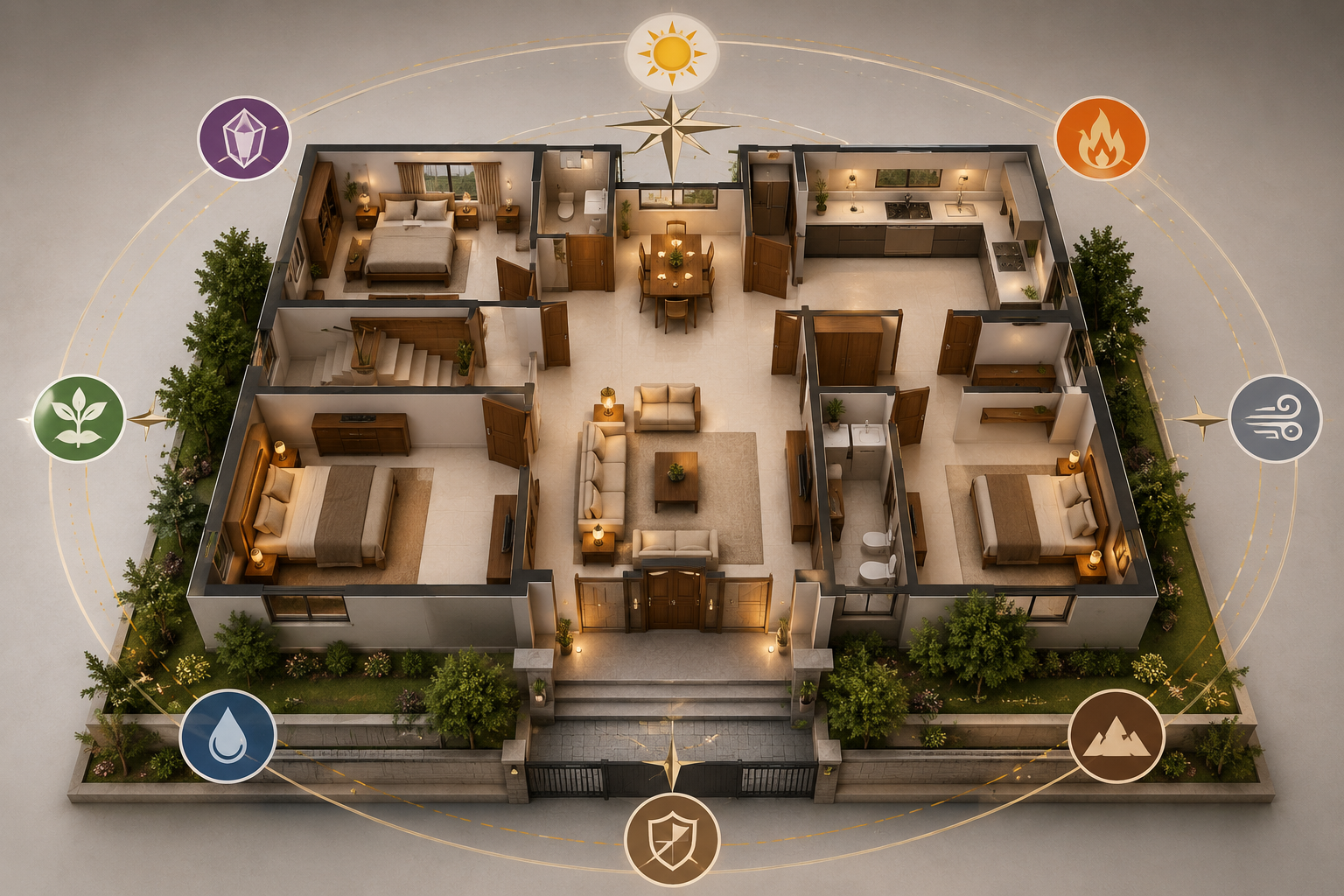
In traditional Vastu Shastra, the South West direction is associated with stability, strength, grounding and the earth element. A South West-facing property can be planned thoughtfully, but the placement of the main entrance, bedrooms, kitchen, toilets, staircase and other spaces is considered important.
It is also worth remembering that Vastu is a traditional architectural belief system, and there is no scientific evidence that a home’s direction directly determines wealth, health or prosperity. However, many homeowners choose to incorporate Vastu principles as part of their cultural and design preferences.
Let’s understand the key Vastu considerations for a South West-facing house.
What Does a South West Facing House Mean?
A house is generally described as South West facing when the main entrance or front of the property faces the South West direction.
However, there can be some confusion between:
- The direction the house faces
- The direction of the main entrance
- The direction of the road
- The direction of the plot
These are not necessarily the same thing.
For example, a property may have a South West-facing road but the main entrance could be positioned differently.
Therefore, before making Vastu decisions, it is important to establish the property’s exact orientation using a reliable compass and understand the complete floor plan.
Is a South West Facing House Good According to Vastu?
According to traditional Vastu principles, the South West zone is considered a heavy and stable area of the home.
It is traditionally associated with:
- Stability
- Strength
- Grounding
- Authority
- Long-term security
Because of this, Vastu guidelines often recommend keeping the South West portion relatively heavy and stable rather than making it excessively open or placing certain high-activity functions there.
However, the direction of the house alone does not determine whether a property is considered Vastu-compliant.
The overall layout matters.
The location of the entrance, kitchen, master bedroom, toilets, staircase, windows and open spaces can all influence a traditional Vastu assessment.
1. Pay Attention to the Main Entrance
The main entrance is one of the most important considerations in Vastu.
For a South West-facing property, simply placing the entrance anywhere along the South or West side may not be considered equally suitable according to traditional Vastu practices.
Many Vastu practitioners recommend dividing the relevant side of the property into sections or padas and selecting an entrance position based on the specific orientation and layout.
Rather than blindly following a generic rule such as “South West entrances are bad,” it is better to evaluate:
- Exact compass direction
- Entrance location
- Plot shape
- Road direction
- Internal layout
- Placement of other rooms
If you are building a new house, the entrance should ideally be planned at the design stage rather than corrected after construction.
2. Master Bedroom in the South West
The South West zone is traditionally considered suitable for the master bedroom.
The reasoning within Vastu is that this part of the house represents stability and grounding, making it suitable for the person who takes primary responsibility for the household.
A South West master bedroom can also be designed to feel private and restful.
Traditional Vastu suggestions include:
- Positioning the master bedroom toward the South West
- Keeping heavier furniture toward the South or West
- Placing the bed so that the head is toward the South or East
- Avoiding excessive clutter
- Keeping the room relatively stable and organised
Regardless of Vastu preferences, practical considerations such as ventilation, natural light, room temperature and privacy should also be considered.
3. Kitchen Placement
The kitchen is another important part of Vastu planning.
Traditionally, the South East is associated with the fire element and is often considered the preferred location for a kitchen.
The North West is also sometimes considered an alternative location.
For a South West-facing home, this means the kitchen does not necessarily need to be placed in the South West simply because the house faces that direction.
Instead, the kitchen can be planned according to the overall floor plan.
Traditional kitchen guidelines include:
- Prefer the South East zone for the kitchen
- Consider North West as an alternative
- Keep the cooking area organised
- Position the stove so the person cooking faces East where practical
- Keep the sink and cooking area appropriately separated
Modern kitchen design should also prioritise workflow, ventilation, appliance placement and safety.
4. Avoid Making the South West Too Light or Empty
One of the recurring ideas in traditional Vastu is that the South West should be relatively heavy and stable.
Therefore, some practitioners recommend avoiding:
- Excessively large openings
- Very light structures
- Large empty spaces
- Water features
- Underground water tanks
in the South West zone.
Instead, heavier furniture, storage or built-up areas may be preferred.
For example, wardrobes, storage units or a master bedroom can naturally add visual and physical weight to this part of the home.
5. Keep the North East More Open
Traditional Vastu generally places importance on keeping the North East relatively open, light and uncluttered.
This can be incorporated into a contemporary home without compromising functionality.
You could consider:
- Larger windows
- Natural light
- Open circulation space
- A small prayer or meditation area
- Plants
- A clean, uncluttered design
The goal is to create a visually lighter part of the house while keeping the South West comparatively grounded.
6. Staircase Placement
The staircase can occupy considerable physical space, making its location important when designing a house.
Traditional Vastu commonly favours heavier zones such as the South, West or South West for staircases, although the ideal position depends on the floor plan.
When planning a staircase, don’t focus on Vastu alone.
Also consider:
- Structural requirements
- Headroom
- Natural light
- Ventilation
- Safety
- Ease of movement
- Available floor area
A well-designed staircase should work naturally with the circulation of the home.
7. Bathroom and Toilet Placement
Bathrooms and toilets are frequently discussed in Vastu planning.
Traditional recommendations vary between Vastu schools, but the North West or West is often considered more suitable than the South West.
If you’re designing a new home, it may be possible to position bathrooms outside the South West zone.
However, in an existing apartment or house, relocating a bathroom may be impractical and expensive.
In such situations, focus first on:
- Waterproofing
- Ventilation
- Drainage
- Hygiene
- Natural or mechanical exhaust
- Proper plumbing
These practical factors are far more important for the actual performance of the space.
8. Colour Choices for a South West House
Colours are another area where Vastu and interior design often overlap.
Because South West is traditionally associated with the earth element, earthy and warm colours are commonly recommended.
You can consider:
- Beige
- Cream
- Light brown
- Tan
- Terracotta
- Warm neutrals
- Muted yellow
These colours can also create a warm and grounded interior aesthetic.
You don’t necessarily have to use the same colour throughout the house. Instead, use a neutral base and introduce warmer tones through furniture, walls, fabrics and décor.
9. South West Facing House: What About the Living Room?
The living room should ideally be positioned based on the overall layout rather than simply the home’s facing direction.
If the living room occupies the South West, consider using heavier furniture and creating a balanced layout.
For example:
- Place the sofa against a solid wall
- Avoid overcrowding the room
- Use warm neutral colours
- Maintain good natural lighting
- Keep circulation pathways clear
The living room should feel stable but not visually heavy.
10. Vastu Tips for the Main Door
If you’re particularly concerned about Vastu, the main door deserves special attention.
Traditional recommendations include:
Keep the entrance clean
Avoid clutter, footwear piles and unnecessary objects directly around the entrance.
Ensure the door opens smoothly
A properly functioning entrance creates a practical and welcoming entryway.
Use adequate lighting
A well-lit entrance can make the home feel more inviting.
Avoid damaged doors
Cracked, broken or poorly maintained doors should be repaired or replaced.
Choose a strong entrance
The main door should feel proportionate to the house and should not look weak or poorly maintained.
These recommendations make sense from both a traditional Vastu perspective and a general home-design perspective.
11. South West Facing House and Water Elements
Water is another major consideration in traditional Vastu.
Some Vastu practices recommend placing water-related features such as:
- Underground water tanks
- Wells
- Water bodies
- Certain fountains
toward the North, North East or East rather than the South West.
Similarly, heavy water storage in the South West is traditionally discouraged.
For an actual home, however, water-tank placement must also follow structural, plumbing and building-code requirements.
12. Should You Buy a South West Facing House?
If you’re considering purchasing a South West-facing house, don’t reject the property based on direction alone.
Evaluate the complete property.
Consider:
1. Plot shape
Is the plot regular and practical?
2. Entrance
Where exactly is the main entrance positioned?
3. Room placement
Where are the bedrooms, kitchen, bathrooms and living areas?
4. Natural light
Does the home receive sufficient daylight?
5. Ventilation
Does air circulate effectively?
6. Practical layout
Does the floor plan work for your family’s lifestyle?
7. Construction quality
Are the structure, plumbing and electrical systems reliable?
8. Location
Is the neighbourhood suitable for your needs?
A home with excellent construction, ventilation, layout and location may be a better choice than a supposedly “perfect” Vastu home that doesn’t work for your everyday life.
Common Vastu Mistakes in a South West Facing House
If you are following traditional Vastu principles, some commonly discussed mistakes include:
Treating the entire South West as unsuitable
South West is not necessarily considered a “bad” direction. In Vastu, it is often associated with stability and is commonly used for heavier spaces such as the master bedroom.
Focusing only on the facing direction
A house cannot be assessed accurately based only on whether it faces North, South, East or West.
Ignoring the entrance position
The exact location of the main door can matter significantly within traditional Vastu assessments.
Overloading the North East
Traditional Vastu generally recommends keeping this area lighter and more open.
Making expensive changes without understanding the layout
Don’t demolish walls or relocate plumbing based on a generic online Vastu tip.
Always understand the complete floor plan first.
Simple South West House Vastu Checklist
If you’re planning a South West-facing home, here’s a quick checklist:
| Area | Traditional Vastu Consideration |
|---|---|
| Main Entrance | Assess exact position, not just direction |
| Master Bedroom | South West is commonly preferred |
| Kitchen | South East commonly preferred |
| Staircase | South/West/South West often considered |
| North East | Keep relatively open and uncluttered |
| South West | Keep relatively heavy and stable |
| Toilet | Avoid South West where practical |
| Water Elements | North/North East/East often preferred |
| Colours | Warm, earthy neutrals can be considered |
| Storage | Heavier storage can work well in South/West |
Final Thoughts
A South West-facing house is not automatically bad or unlucky according to Vastu. Traditional Vastu considers the home as a complete system, where the entrance, room placement, elements, proportions and overall balance all matter.
If you’re building a new home, Vastu considerations can be incorporated into the architectural planning from the beginning.
If you’re buying an existing property, don’t let one factor—such as the house facing direction—make the decision for you.
Look at the complete floor plan, entrance position, natural light, ventilation, functionality, construction quality and your family’s requirements.
And if Vastu is important to you, consult a qualified Vastu practitioner or architect who can evaluate the actual property rather than relying on a generic checklist.
Ultimately, the best home is one that feels comfortable, functional, safe and truly suited to the people living in it.