Introduction
When expanding a retail business, choosing the right city is only the first step. Equally important is designing a store that aligns with the local market, customer behavior, mall ecosystem, and real estate landscape. While Pune and Mumbai are two of India’s strongest retail markets, they differ significantly in consumer expectations, commercial spaces, rental costs, and design priorities.
A retail store that performs well in Mumbai may require a completely different design approach in Pune. Understanding these differences can help brands create engaging shopping experiences, improve operational efficiency, and maximize return on investment.
In this blog, we’ll explore the key differences between retail store design in Pune and Mumbai, helping brands make informed architectural and business decisions.
Understanding the Retail Landscape
Both Pune and Mumbai are thriving commercial hubs, but they cater to different customer demographics and shopping behaviors.
Mumbai is India’s financial capital, home to luxury malls, international brands, and a fast-paced consumer market. Customers expect premium experiences, modern aesthetics, and convenience.
Pune, on the other hand, is a rapidly growing city driven by IT professionals, educational institutions, and expanding residential communities. Consumers are value-conscious but increasingly appreciate well-designed, experience-driven retail spaces.
These differences directly influence how retail stores should be designed.
1. Customer Demographics
Mumbai
Mumbai attracts:
- High-income professionals
- Luxury shoppers
- Tourists
- Corporate executives
- International customers
These consumers often seek premium retail experiences and sophisticated interiors that reflect the brand’s exclusivity.
Pune
Pune’s customer base includes:
- Young professionals
- Families
- Students
- Entrepreneurs
- IT employees
Retail spaces here benefit from functional layouts, comfortable shopping environments, and approachable design aesthetics.
2. Store Size and Space Planning
One of the biggest differences lies in available commercial space.
Mumbai
Due to extremely high real estate costs:
- Smaller retail units are common.
- Every square foot must be optimized.
- Storage areas are compact.
- Vertical merchandising is widely used.
Designers focus on maximizing product visibility without making the store feel crowded.
Pune
Retail spaces are generally larger and more flexible.
Brands can incorporate:
- Wider aisles
- Interactive product zones
- Larger display areas
- Comfortable waiting spaces
- Better back-end storage
This allows for a more relaxed customer experience.
3. Real Estate Costs
Commercial rentals in Mumbai are among the highest in India.
As a result:
- Interior investments must deliver measurable ROI.
- Space utilization becomes a top priority.
- Modular furniture is preferred for flexibility.
In Pune, comparatively lower rentals allow brands to invest more in:
- Premium interiors
- Customer experience
- Feature walls
- Interactive displays
- Brand storytelling elements
4. Design Language
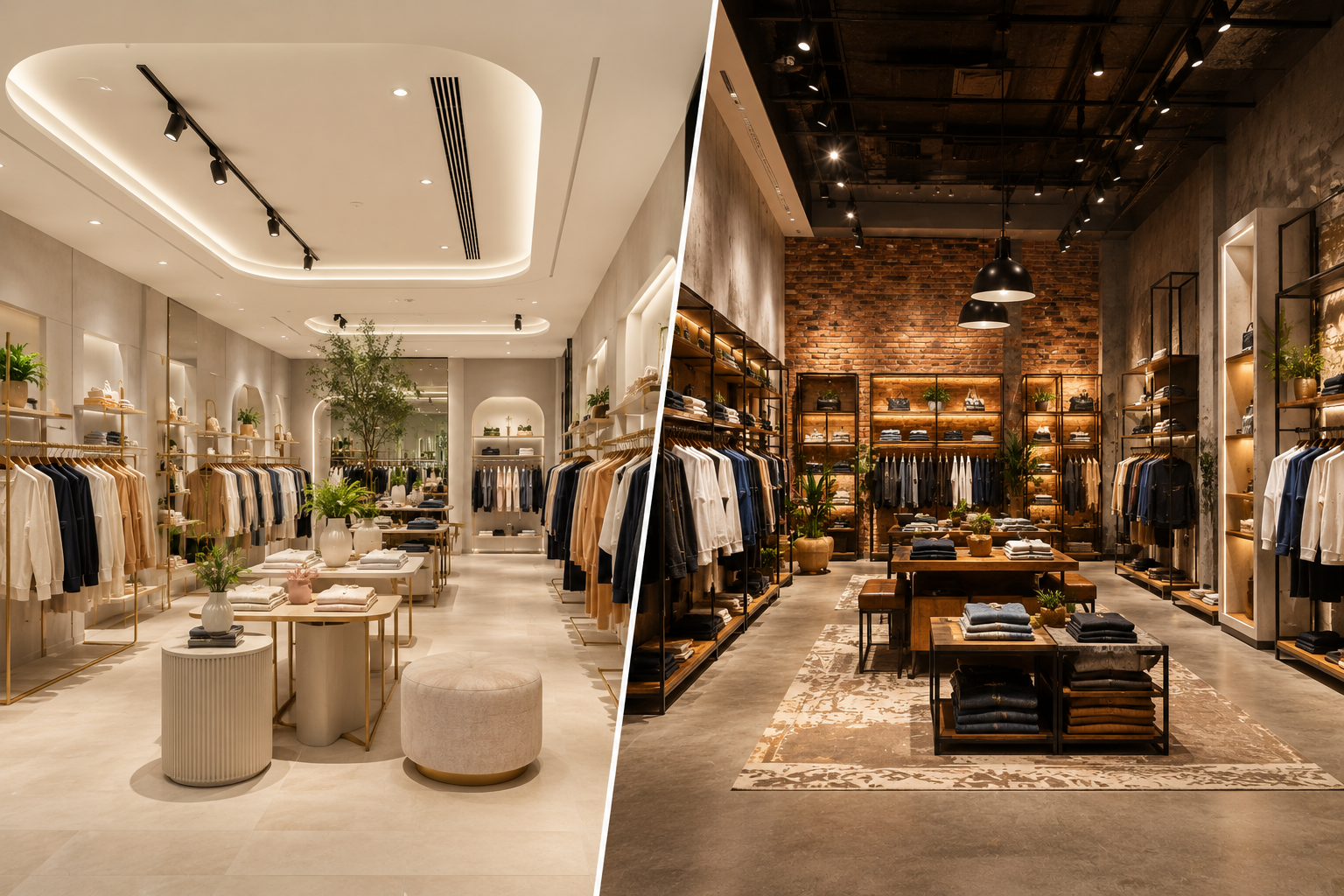
Mumbai Retail Design
Mumbai stores often emphasize:
- Minimalist luxury
- Premium finishes
- Elegant lighting
- Sophisticated materials
- Modern storefronts
The objective is to communicate exclusivity and create a high-end shopping experience.
Pune Retail Design
Pune stores often focus on:
- Warm interiors
- Functional layouts
- Comfortable navigation
- Practical display systems
- Community-friendly environments
Brands frequently blend modern aesthetics with approachable design.
5. Customer Shopping Behaviour
Mumbai
Customers generally:
- Shop quickly
- Compare premium brands
- Value convenience
- Prefer organized layouts
Store designs therefore prioritize:
- Fast circulation
- Easy product discovery
- Efficient billing
- Clear visual merchandising
Pune
Customers tend to spend more time exploring products.
Stores benefit from:
- Interactive displays
- Seating areas
- Lifestyle-inspired merchandising
- Experience zones
Encouraging longer visits often leads to higher purchase values.
6. Mall Infrastructure
Mumbai features some of India’s largest premium shopping malls with strict fit-out guidelines and advanced building systems.
Retail designers must coordinate carefully with:
- HVAC systems
- Fire safety requirements
- Mall branding guidelines
- Structural limitations
- Delivery schedules
Pune malls also maintain professional standards, but projects often allow slightly greater flexibility depending on the development.
7. Lighting Strategy
Lighting requirements differ based on the target audience.
Mumbai
Premium retail brands typically use:
- Accent lighting
- Luxury display lighting
- Layered illumination
- High-contrast visual effects
The goal is to elevate product presentation and create a premium atmosphere.
Pune
Retailers often choose:
- Warm ambient lighting
- Comfortable shopping environments
- Balanced product illumination
- Energy-efficient lighting systems
The emphasis is on creating a welcoming and relaxed retail experience.
8. Brand Positioning
Brands entering Mumbai often compete with international retailers.
Store interiors therefore become an extension of the brand’s identity.
Common investments include:
- Premium façade design
- Digital displays
- Bespoke furniture
- Signature lighting
- Luxury materials
In Pune, while branding remains essential, successful stores often prioritize accessibility, functionality, and customer engagement alongside aesthetics.
9. Execution Challenges
Mumbai
Retail fit-outs often involve:
- Limited working hours
- Traffic-related logistics
- High labour coordination
- Tight construction schedules
- Complex approval processes
Pune
Execution is generally smoother due to:
- Easier site access
- Lower logistical constraints
- Faster material movement
- More flexible scheduling
However, timely planning and professional project management remain essential in both cities.
10. Cost of Retail Store Development
Because of higher rentals, labour costs, and premium material demands, retail projects in Mumbai often require a larger overall investment.
Pune offers greater flexibility for brands working with moderate budgets while still enabling high-quality retail environments.
Regardless of the city, investing in thoughtful design improves:
- Customer experience
- Brand recognition
- Sales performance
- Operational efficiency
- Long-term business growth
How BVM INTSOL Designs Retail Spaces for Different Markets
At BVM INTSOL, we understand that successful retail design is never one-size-fits-all.
Our approach begins with analyzing:
- Target customers
- Brand positioning
- Store location
- Business objectives
- Product categories
- Operational workflow
- Budget requirements
Based on these insights, we create retail environments that are tailored to the unique characteristics of each market.
Our services include:
- Retail Store Architecture
- Commercial Interior Design
- Space Planning
- Retail Fit-Out Design
- Turnkey Project Execution
- Mall Approval Drawings
- Project Management
- Brand Experience Design
Whether it’s a premium boutique in Mumbai or a lifestyle retail store in Pune, our focus remains on creating spaces that combine aesthetics, functionality, and commercial success.
Choosing the Right Design Strategy
If your brand targets luxury consumers and premium positioning, a Mumbai-inspired design approach with sophisticated materials and refined detailing may be ideal.
If your focus is on family shopping, community engagement, and comfortable browsing experiences, a Pune-oriented design strategy may deliver better customer satisfaction and stronger conversions.
The best retail environments are those that reflect both the brand’s identity and the expectations of the local audience.
Conclusion
Although Pune and Mumbai are geographically close, their retail environments differ in meaningful ways. Customer behavior, real estate economics, mall infrastructure, and design expectations all influence how a retail store should be planned and executed.
Brands that adapt their store design to local market dynamics are better positioned to attract customers, strengthen their identity, and improve long-term profitability.
At BVM INTSOL, we specialize in designing retail spaces that go beyond aesthetics. By combining strategic planning, architectural expertise, and turnkey execution, we create stores that deliver exceptional customer experiences while supporting business growth in both Pune, Mumbai, and across India.