Introduction
Opening a retail store is exciting. There is a lot to look forward to the interiors coming together, the branding going up, the products arriving, and finally seeing customers walk through the doors.
But behind that final opening day is a very different reality.
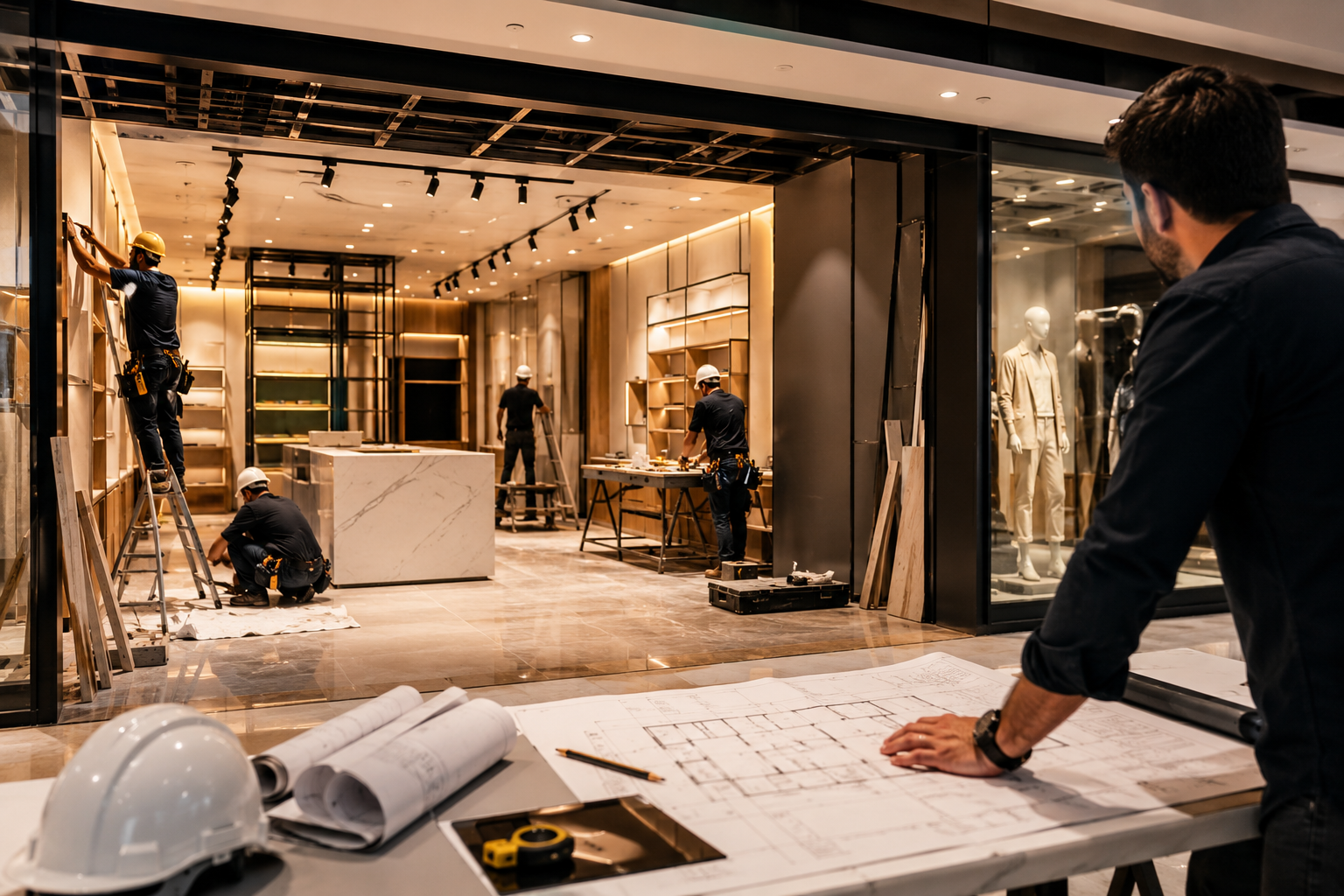
A retail store inside a mall is not simply a matter of designing a beautiful space and building it. There are approvals to manage, materials to procure, contractors to coordinate, mall guidelines to follow, and often a very tight deadline to work with.
This is where project management becomes one of the most important parts of a retail store project.
Why Retail Store Projects Often Run Late
Retail projects work against the clock.
A brand may have already announced a store opening date, planned marketing campaigns, hired staff and arranged inventory. Even a small delay in construction can create a chain reaction.
A delay in electrical work can push furniture installation.
A delay in furniture can affect signage.
A delay in signage can affect the final inspection.
Before you know it, the opening date is at risk.
And in a shopping mall, there is another layer of complexity. Work timings, material movement, fire and safety requirements, loading access and approval processes are often controlled by the mall management.
So, completing the project on time requires much more than simply having a large workforce.
It requires planning.
Project Management Starts Before Construction
One of the biggest mistakes in retail projects is starting execution before everything has been properly planned.
A good project manager looks at the entire project before work begins.
This includes understanding:
- The store layout and design
- Mall guidelines and restrictions
- Required approvals
- Electrical and HVAC requirements
- Material specifications
- Procurement timelines
- Contractor requirements
- Labour requirements
- Expected handover date
The goal is simple: identify potential problems before they become problems on site.
Breaking the Project Into Smaller Milestones
A retail store cannot be completed in one step.
The project needs to be divided into smaller, measurable stages.
For example:
Design → Approvals → Procurement → Civil Work → Electrical & HVAC → Flooring → Furniture → Branding & Signage → Finishing → Inspection → Handover
Each stage has a dependency on another.
Project management ensures that these activities are scheduled in the right sequence while identifying which activities can happen simultaneously.
For instance, certain materials can be ordered while civil work is underway. Furniture can be manufactured off-site while electrical work is being completed.
This saves valuable time.
Procurement Can Make or Break a Timeline
Materials are often an overlooked part of retail project management.
Imagine the flooring is ready, the site team is ready, but the specified light fixtures haven’t arrived.
The entire team may have to wait.
This is why procurement needs to happen alongside project planning.
Long-lead materials should be identified early. Orders should be placed well in advance, and alternative suppliers or materials should be considered wherever appropriate.
The objective isn’t just to buy materials.
It is to make sure the right material reaches the site at the right time.
Coordinating Multiple Teams
A retail store project can involve architects, interior designers, civil contractors, electricians, HVAC teams, carpenters, signage vendors, mall representatives and the client’s internal team.
Without proper coordination, everyone can be working hard while the project still moves slowly.
Project management creates a single point of coordination.
The teams know:
- What needs to be done
- Who is responsible
- When it needs to be completed
- What the next activity depends on
This reduces confusion and prevents different teams from getting in each other’s way.
Managing Mall Approvals
Mall projects have their own set of rules.
Drawings may need approval before execution. Certain materials may require clearance. Fire safety, electrical systems, signage and other elements may need to comply with mall specifications.
Waiting until the last minute to deal with approvals can seriously affect the schedule.
Experienced project management accounts for these requirements from the beginning and builds approval timelines into the overall project plan.
Managing Changes Without Losing Control
Changes are common in retail projects.
A client may want to change a finish. A material may become unavailable. A mall may introduce an additional requirement. Or the brand may decide to modify part of the design.
The problem isn’t necessarily the change itself.
The problem is an unmanaged change.
A good project manager evaluates how a change will affect cost, timeline, manpower and other activities before implementing it.
This allows the team and client to make informed decisions instead of discovering the consequences later.
Site Monitoring Is Just as Important as Planning
A project plan is only useful if it is followed.
Regular site inspections and progress tracking help identify whether the project is actually moving according to schedule.
If one activity falls behind, the project manager can immediately look for ways to recover the lost time perhaps by increasing manpower, changing the sequence of work or running certain activities simultaneously.
This proactive approach is far better than discovering a major delay a few days before the handover.
The Final Week Matters the Most
The last few days of a retail project can be surprisingly hectic.
Furniture might be installed, signage completed, lights tested and branding put in place all while the team is preparing for final inspections and handover.
This is where detailed coordination becomes critical.
A proper snagging process helps identify unfinished or defective work before the final handover.
Every small detail matters because the store is ultimately a reflection of the brand.
On-Time Delivery Is a Team Effort
On-time retail store delivery isn’t about rushing the work.
It’s about planning the work properly so that there is less unnecessary waiting, rework and confusion.
When design, procurement, execution, approvals and site management are coordinated from the beginning, the project becomes much more predictable.
At BVM INTSOL, project management is an integral part of retail design and execution. From understanding the site and coordinating approvals to managing vendors, materials and on-site execution, every stage needs to work together toward one goal delivering a retail space that is ready when the brand is ready to open its doors.
Because in retail, the store opening date isn’t just a date on a calendar.
It’s a commitment.